

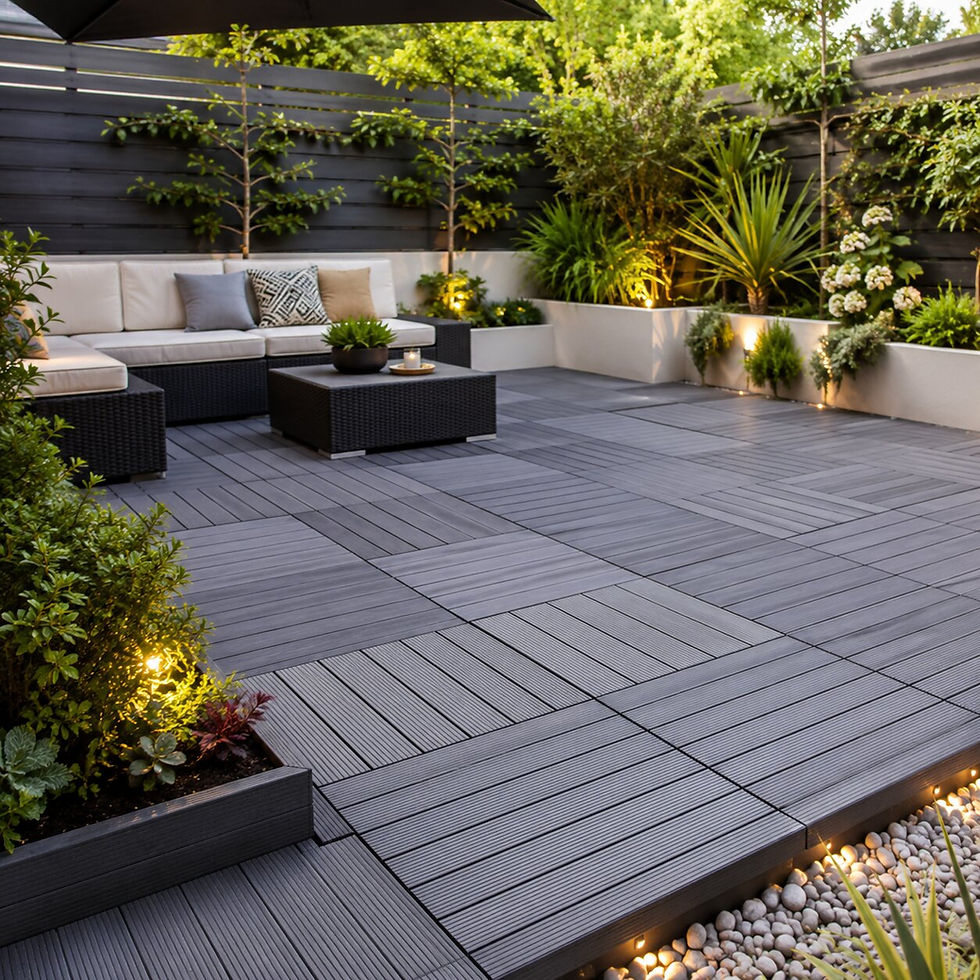
Decking Tiles for Garden Decks and Patios

Neither a large budget nor builder is required. The quick and enjoyable way to update your outdoor area is with Decking Tiles. So, these ingenious tiles come together to form a stunning floor. While they can be applied to a level lawn, old slabs, or concrete.
The Benefits of Decking Tiles for Gardens
Let's discuss the major advantages. Conventional decking requires a lot of labor. You'll need to use numerous tools, cut wood, and construct a frame. It requires skill and patience.
Decking tiles are not the same. Hence, they are separate planks or squares that lock together. Consider them your garden's enormous puzzle. Consequently, they are therefore ideal for do-it-yourself projects. A patio can be completed in just one weekend. Thus, they are also incredibly adaptable.
Your Material Options: Composite or Wood
The style and longevity of the tile are determined by the type you select.
Actual Wooden Tiles
These provide you with timeless, organic beauty. Hardwoods such as teak, oak, and cedar are used to make them.
Ideal For: A cozy, rustic appearance that softens to a silvery-grey as it ages.
What You Should Know: They require some attention. Specifically, to maintain the color, you should apply oil to them after a year. Underfoot, they feel fantastic.
Tiles Made of Composite
These are the champions of low maintenance.
Ideal For: Areas near pools and busy families. In addition, they won't fade, splinter, or rot.
What to Know: They never require staining or sanding. Yet, simply use soapy water to wash them. They are available in a variety of hues, ranging from contemporary grey to natural wood tones.
Interlocking Tiles and PVC
These tiles are made entirely of plastic and are lightweight. They frequently follow a grid pattern.
Ideal For: Transient areas, balconies, and quick makeovers. They quickly drain water.
What to Expect: They are inexpensive and simple to manage. Compared to natural wood, the appearance is more contemporary.

Design Concepts to Inspire Your Creativity
You have a blank canvas in your garden. You can design various "rooms" outside with Composite Decking Tiles. Firstly, make a dining area by placing tiles beneath your outdoor chairs and table. This immediately establishes a unique location for meals and summertime cookouts.
Secondly, create a balcony oasis by adding warm wood tiles to a dull concrete balcony. To create a private haven, add a chair while others plant.
Lastly, create a garden path by placing tiles along a walkway. It keeps your feet dry and clean while also looking stylish.
Renovate an Old Patio: For an immediate improvement, lay decking tiles directly on top.
Zone Your Garden: Create a "floor" for the lounge chairs using tiles.
This keeps the lawn as well as flower beds apart from your leisure space.
Easy Steps for Installing Tiles
Installing the flooring is a simple task. You can do it on your own. Simply follow these instructions.
Set Up the Base: The surface needs to be level and firm. Compacted gravel, patio slabs, or concrete are ideal. Make sure the grass is level and extremely short if you choose to use it.
Create a layout by arranging a few tiles without locking them. So, check out how they fit into your room. This aids in the planning of any edge cuts.
Let's begin clicking together: Start in a corner. Use the interlocking edges to join the tiles. They ought to fit or click together with ease. If they are tight, gently tap them into place with a rubber mallet.
Cut Border Tiles: The final tile in every row will most likely need to be cut. Take precise measurements. For a clean cut, use a handsaw with fine teeth. Hence, wear safety glasses at all times.
Add Final Details: After every tile is in place, fill in any tiny spaces with sand. This maintains the tiles' stability and aids in drainage.
Simple Maintenance for Durable Beauty
It's easy to maintain your wooden tiles. Besides, they will remain lovely for many years with a little maintenance.
Sweep Frequently: To remove leaves, dirt, and debris, use a stiff brush. This prevents mildew and stains.
Wash Occasionally: Give them a thorough cleaning at least once a year. Use a soft brush and either mildly soapy water or a specialty wood cleaner. Use a hose to thoroughly rinse.
Protect the Wood: Use a protecting oil or stain for wood that is soft or if you wish to preserve the color. Once the wood is dry and clean, do this. Usually, this work is done once a year.


Comments