

Wooden Decking Tiles for Garden Pathways

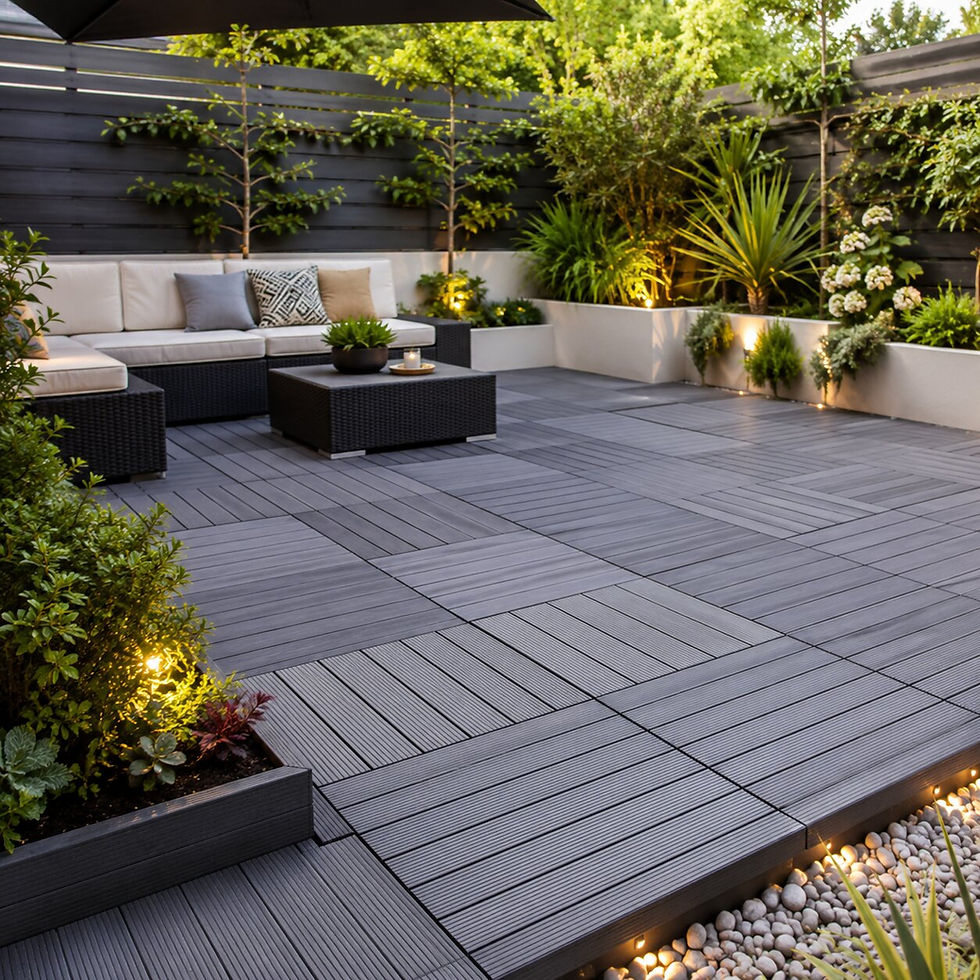
Paths in gardens help people get around and change the way outdoor spaces look. But these paths are often unsafe and unattractive because of uneven surfaces, mud, and being outside in inclement weather. So, it's important to pick the right surface. The high quality Wooden Decking Tiles are an easy and stylish way to make strong and beautiful paths in your garden.
These tiles look natural, are easy to put down, and last a long time. They let you set them up quickly without complicated tools because they have interlocking systems. While they also make walking more comfortable and make outdoor spaces look better. Because of this, wooden decking tiles are now a popular choice for paths in gardens.
The Main Reasons to Use Decking Tiles for Landscape Paths
1. Very Simple to Put Together
You don't need heavy tools, gravel, or cement. First, get rid of any big rocks or weeds on the ground. Thereafter, use a rake to roughly level the ground. Next, put the first tile down where you want it to go. Finally, put the next tiles in place. In less than two hours, one person can finish a 10-meter path. Hence, you save energy, money, and time.
2. Can be Used Again and Again and Carried Around
Decking tiles allow you to change your mind, unlike concrete paths that last forever. You can pick them up and move them around whenever you want. So, you can bring the tiles along if you move. This flexibility lets you be creative without having to make a commitment.
3. Easy on the Environment
Rain can soak into the ground below wooden decking tiles. They don't make water run off like solid paving does. Moreover, this feature keeps your garden's natural drainage safe and stops flooding. Many companies use wood that has been certified or bases made of recycled plastic. You make a beautiful path that doesn't hurt the environment.
4. Needs Little Care
You don't have to do much to take care of wooden decking tiles. Once a week, sweep away dirt and leaves. Once a month, wash them using a garden hose. Use outdoor oil or wood sealant once a year. This easy routine will keep the wood looking new for 5 to 7 years. Just replace one tile at a time if it gets broken.
How to Use Decking Tiles to Plan the Garden Pathway
Get an Accurate Measurement of Your Space
First, figure out where you require a path. Some common paths are from the outdoor space to the house, from the entrance to the entrance door, or through flower beds. To find the duration and width, use a tape measure. To find the total square meters, multiply the length by the width.
Pick the Right Type of Wood
Teak is the most durable wood and has natural oils. It does a great job of keeping bugs and the weather out. Teak, on the other hand, costs more. Cedar is a cheaper option. It smells great and keeps moths away on their own. Bamboo provides a modern, green look. Hence, it grows rapidly and can be used again without being replanted. Choose the wood that fits your aesthetic and budget.

Get the Ground Ready Right
For the best results, get rid of all the weeds and grass first. Put a weed protection fabric under the Decking Tiles. This step keeps plants from growing through the holes. Then, put a thin covering of sandy particles or fine gravel on top. To make a stable base, rake it flat. The sand keeps the tiles level. You don't need a slab of concrete or mortar.
Ideas For How to Creatively Design the Wooden Tile Path
Make a Winding Path Through the Woods
Don't make the tiles go in a straight line; instead, curve them gently via your garden. Put ferns, hosts, and moss on the edges. Furthermore, the wood looks good with the plants. This design makes me feel like I'm in a magical place.
Combine Wood with Stone or Gravel
You don't have to put tiles all over the place. Put some wooden tiles on the ground in a gravel bed to use as steppingstones. Or switch between wooden squares and slate circles. So, the difference in textures makes the picture more interesting. Your path turns into a work of art.
Make a Raised Pathway for Areas that are Wet
If there is a wet spot in your garden, put the tiles upon plastic deck supports. These little pedestals raise the way 5 to 10 cm off the ground. While, water flows below, keeping your feet dry. This method works great in places where it rains a lot.


Comments