

Are Composite Decking Tiles Worth the Investment?

Composite decking tiles have gained immense popularity within the last decade because they are easy to install, visually appealing, and require minimal maintenance. However, they tend to be pricier than traditional wooden decking or other materials, leading property managers and homeowners to often question.
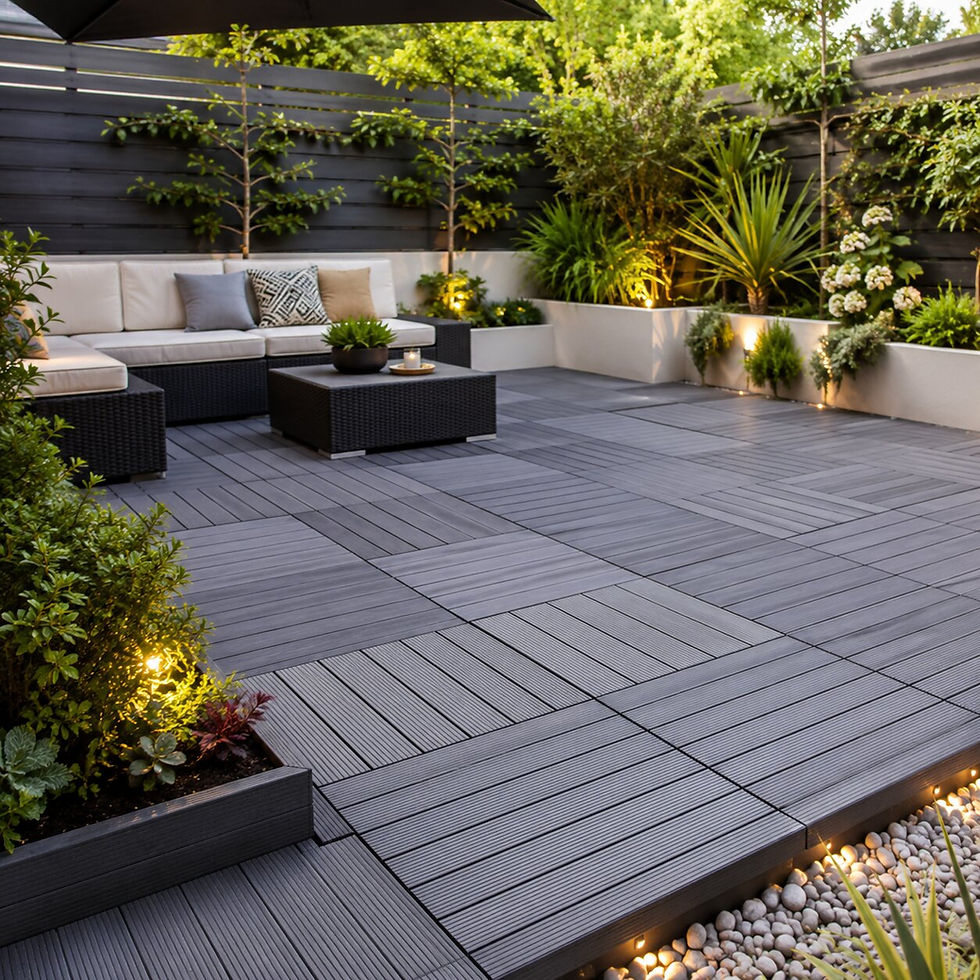
Composite Decking Tiles have come equipped with interlocking mechanisms for easy, unmounted installation (no nails, screws, or glue). They are best for DIY restoration projects on patios, balconies, rooftops, and terraces, as they can be placed directly over concrete, old decking, or flat ground.
Advantages of Composite Decking Tiles
Low Maintenance
Composite decking tiles require very little maintenance, which increases their appeal to customers. No splinters Resistant to mold, mildew, and insects Requires only infrequent sweeping and washing. This level of convenience leads to savings in both time and money over the long term.
Weather Resistance
Composite tiles materials are particularly useful for areas with coastal locations, urban rooftops, or regions that experience extreme weather changes.
Aesthetic Variety
With the modern look of composite decking tiles, they are offered in numerous colors, grain patterns, and finishes, depicting natural wood. Some tiles even go as far as offering textures resembling exotic hardwoods. Also, due to the modular nature of tiles, custom designs are easy to achieve.
Eco-Friendly Choice
Due to the use of reclaimed wood fibers and plastics, many composite decking tiles promote sustainable manufacturing. Supporting these tiles helps in reducing landfill waste, making it a preferred option for eco-friendly customers. On top of that, these tiles are more enduring and do not require replacing as often as traditional wood, making them another environmental benefit.
Easy DIY Installation
Composite Decking Tiles are user-friendly and easy to install. Most tiles come with snap-in or click-lock mechanisms, eliminating the need for special tools, unlike other surfaces that require these tools. The area can be measured, the edges trimmed, and tiles clicked into place. No contractors, power tools, or construction work are needed.

Downsides of Composite Decking Tiles
Heat Retention
This could pose a problem on hot summer days because it may become uncomfortable to walk barefoot. Placing the Composite Decking Tiles in shaded locations or choosing lighter-colored ones might help mitigate this issue.
Less Natural Feel
The absence of real wood feel, and smell might be a drawback for some people, even if composites deck tiles are made to mimic wood. While the tactile difference may be slight for most, those who appreciate the genuine wood experience may find it bothersome.
When Are Composite Decking Tiles Worth It?
Urban and Small-Space Applications
These tiles are perfect in areas such as balconies, rooftop patios, and condo terraces, which would be difficult or too intrusive for conventional decking installation. Small and irregularly shaped spaces can also be easily fitted out with the interlocking system.
Temporary or Rental-Friendly
Project Tiles offer a practical solution for renters or individuals who wish to improve outdoor flooring without making permanent changes, as they can be laid over surfaces and removed without damage.
Harsh Climate Zones
Unlike wood, which can quickly degrade or warp in homes that experience extreme moisture, snow, or UV exposure, composite decking provides a better long-term option. Low-Maintenance Preference If maintaining landscaped areas is not a personal interest, outdoor composite decking tiles will provide more leisure time.
Are Composite Decking Tiles a Good Return on Investment (ROI)?
Along with the aesthetic and functional value brought to outdoor spaces with composite decking tiles, enhancing the real estate value is a significant factor for prospective buyers or renters. Properly maintained balconies or patios boost curb appeal while increasing the available living area. Moreover, compared to wood, which may need replacement in 10–15 years, these tiles’ durability means their cost is spread out over decades. Therefore, for homeowners expecting to remain in their property for the long haul or landlords seeking lower maintenance spending, the ROI is highly advantageous.
Selecting Quality Composite Decking Tiles
Look for slip-resistant surfaces: This is crucial in wet or humid climates.
Make Certain There Is Drainage: For outdoor use, select tiles that have grid drainage built in. Warranty comparison: Trustworthy brands provide 10–25 year warranties.
Check Material Makeup: Equal proportions of wood plastic composite and recycled plastic enhance lasting strength.


Comments